Both/And: Holding Two Things at Once…to Become Something More.
"A paradox is something that appears to be a contradiction, but from another perspective is not a contradiction at all."
—Richard Rohr, Holding the Tension: The Power of Paradox
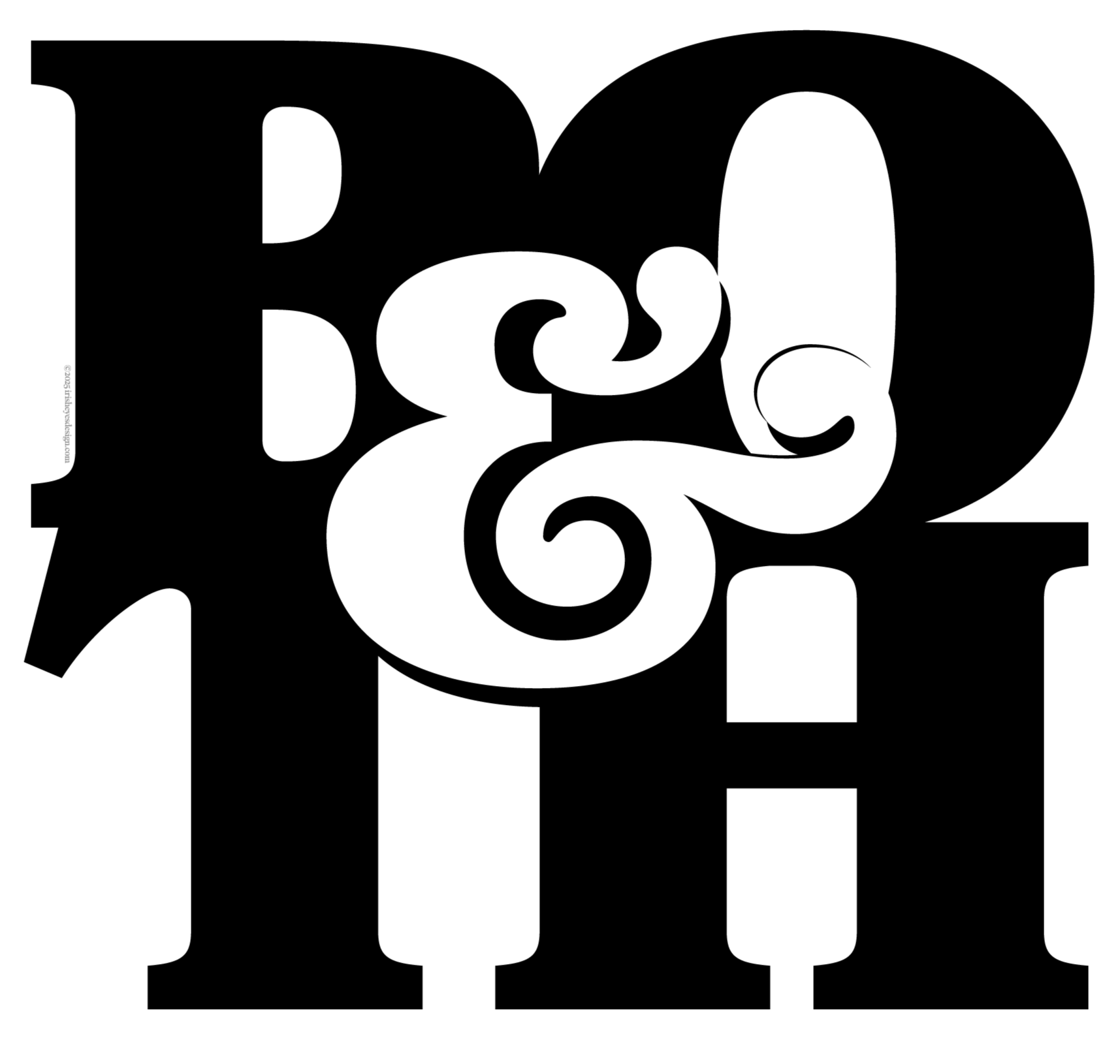
I keep a logo near my desktop that I designed for fun—for clarity. BOTH spelled out in a grid, with a single oversized ampersand laid over top. The ampersand doesn't interrupt the word. It completes it.
Both. And.
It sits there as a reminder: not either/or; both/and.
Two people whose work has changed the way I move through the world, Richard Rohr and Brené Brown, arrived at this same place from entirely different directions. Rohr came through contemplative theology, a lifetime of sitting with paradox and refusing to resolve it too quickly. Brown came through research: years of listening to people talk about shame, courage, and what it actually takes to show up. Different roads, same territory.
Both will tell you: the either/or impulse is a trap. Certainty is comfortable. Resolution feels like progress. But the most interesting—and the most honest—territory tends to live right in the tension between two things that both happen to be true.
Brown puts it this way in her most recent book, Strong Ground:
“The gift of the paradox is that if we hang in there and tolerate the tension
—grounding down and holding both ideas—
a new and deeper level of understanding is born.”
Similarly, Rohr has been quoted as saying,
“We do not think ourselves into new ways of living;
we live ourselves into new ways of thinking.”
But, “How does this relate to design?” you might ask. Well, let me tell you: there is a lot of thinking in design! We are solving creative problems every step of the way.
Where either/or shows up in branding work
Every project I take on arrives with at least one built-in tension. Not a problem to solve; a pair of true things pulling in different directions. A few I see constantly:
Budget versus ambition. You want the full agency-caliber identity, and you're not working with an agency-sized budget. The either/or answer is to shrink the vision to fit the number. The both/and answer asks what a smaller, smarter scope can still deliver on the parts that matter most.
Brand consistency versus creative freedom. You've built recognition around a look, and you're tired of it. The either/or answer is to either abandon everything you've built or stay stuck with what no longer fits. The both/and answer keeps what's earned equity, the color, the mark, the feeling, while letting the execution evolve.
What you want versus what the market needs to see. You have a clear vision for your brand. Your audience has expectations shaped by your industry. The either/or answer picks a side and calls it done. The both/and answer finds the version of your vision that your audience can actually recognize as trustworthy.
None of these get resolved by picking a winner. They get resolved by staying in the tension long enough for a third thing to show up.
My Process
That's exactly what happens in my design process when I'm working in alignment. A client brings me their vision; I bring mine. My instinct pulls one direction; theirs pulls another. The lazy version of this process is a negotiation, where one side wins a little and the other side loses a little, and everyone calls it compromise. The real version is something I call The Third Option: the solution that neither of us would have found alone, the one that only exists because we held both ideas long enough to let something new emerge. As Brown and Rohr promised, we literally live into the paradox!
That's the both/and. Not compromise. Not capitulation. Something better than either option on its own: the good stuff.
What does this looks like in practice?
I don't chase the third option by splitting the difference. Splitting the difference is just a slower version of either/or; it still treats the two ideas as opponents. Instead, I ask what each side of the tension is actually protecting. Your instinct to keep the old logo mark isn't really about the mark; it's about not wanting to lose the recognition you've spent years building. Once I know what's being protected, I can design toward both things at once, instead of trading one for the other.
This is also why the first conversation with a new client matters more than the first sketch. I need to hear both sides of the tension before I can find the third option; I can't design my way to it blind. That's part of why the work starts with real conversation, not a brief and a deadline.
The both/and version of your brand
If you've been handed an either/or and you know in your gut there's a third option, for your brand, your business, or the story you're trying to tell, that's exactly the conversation I'm built for. Let's connect and find it together.
Aurelie Gallagher is the designer behind Irish Eyes Design, a boutique graphic design studio for small businesses and entrepreneurs, specializing in brand identity, print design, and Squarespace websites. She believes that great design starts with knowing yourself first.